ADAS testing with ADMA: precise, flexible, proven worldwide
What matters most is the synchronized capture of the positions of all involved vehicles, objects, and people as well as their relative motion to one another. Our ADMA systems deliver exactly this data, enabling reliable evaluation of functions such as adaptive cruise control, lane keeping assist, and automatic emergency braking.

These customers trust us


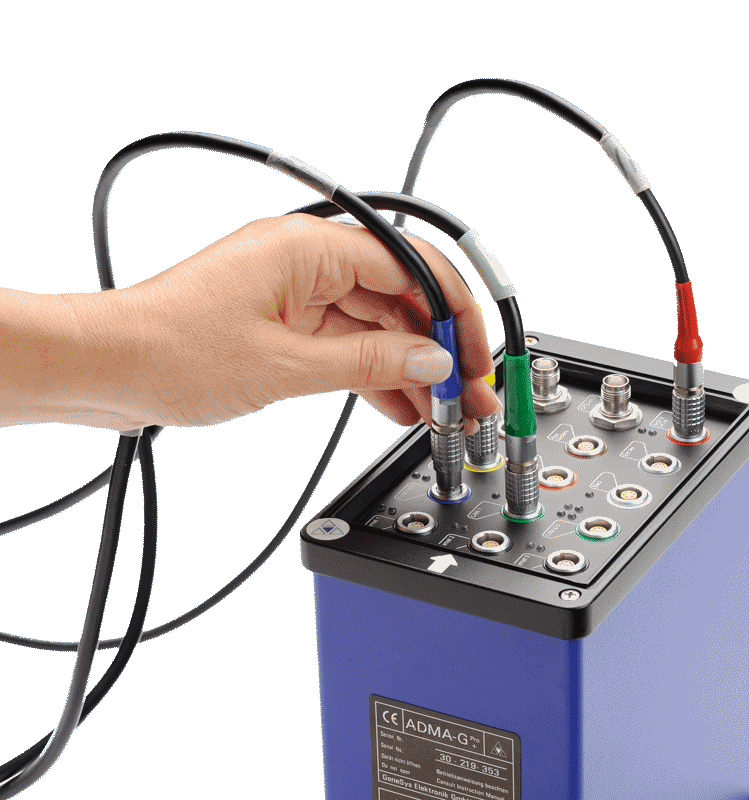
ADAS Testing: Solving Real-World Challenges with Precision
Our comprehensive ADAS testing solutions including multiple ADMA variants, flexible options, innovative add-ons, and a wide range of compatible accessories give you unmatched flexibility to build a system tailored to your specific testing needs.
Whether you’re simulating collision avoidance, lane keeping, or autonomous driving scenarios, our technology ensures precise and reliable results in any test environment.
Key Features

Up to 1 cm accuracy with GNSS + INS and 1000 Hz output even during GNSS outages.

Meets all global ADAS test standards for Euro NCAP and NHTSA.

Log data via up to 5 CAN buses and Ethernet at 100 Hz for complete sync.

Real-time sync for up to 5 vehicles with <1 ms latency.

Works with AB Dynamics, Stähle, Vehico for precise, repeatable maneuvers.

Ready in minutes; modular design for easy feature upgrades.
Flexible architecture: add features or expand without hardware changes.

No export restrictions ideal for global projects.

Quick setup via intuitive web interface, no extra software.

Firmware updates and expert support at no cost.

Weltweit verfügbare Korrekturdienst-Netzwerke

Sofortige Konvergenz macht Ihre Anwendung sofort betriebsbereit und minimiert die Ausfallzeiten

Bis zu 10 Minuten Wiederholungszeit zur Überbrückung von Mobilfunkausfällen, damit Ihre Anwendung weiterläuft

Nahtlose, konsistente Genauigkeit, wo immer Sie sich bewegen, ohne an eine Basisstation gebunden zu sein

Fungiert als Basisstation, wenn es an ein Funkmodem oder einen WiFi-Router angeschlossen ist
Free data analysis software for ADAS testing
Accelerate your ADAS validation with our free Data Analyzer software, designed for automotive engineers and test teams. Combined with the ADMA Data Logger, it enables precise GNSS/INS data processing and delivers actionable KPIs for Euro NCAP and OEM compliance.

Applications

Lane keeping (LDW / LKA)
Lane Departure Warning (LDW) and Lane Keeping Assist (LKA) help maintain safe lane positioning and prevent unintended lane departures. Testing ensures the system accurately detects lane markings in different conditions, including curves, shadows, and varying road surfaces. Read more

AEB Testing (AEB / FCW)
Automatic Emergency Braking (AEB) and Forward Collision Warning (FCW) systems are critical for preventing accidents. ADAS testing in this area focuses on precise timing of warnings and interventions during imminent collision scenarios. We provide high-accuracy GNSS-based measurements to validate braking distances, reaction times, and system performance against regulatory protocols. Read more

Adapting cruise control (ACC)
ACC testing verifies longitudinal control and safe following distances in dynamic traffic environments. Our ADAS validation tools measure speed, acceleration, and gap consistency during cut-in and cut-out maneuvers, ensuring compliance with OEM specifications and international safety guidelines. Read more
Lane keeping (LDW / LKA)
Lane Departure Warning (LDW) and Lane Keeping Assist (LKA) help maintain safe lane positioning and prevent unintended lane departures. Testing ensures the system accurately detects lane markings in different conditions, including curves, shadows, and varying road surfaces. Read more
Lane keeping (LDW / LKA)
Lane Departure Warning (LDW) and Lane Keeping Assist (LKA) help maintain safe lane positioning and prevent unintended lane departures. Testing ensures the system accurately detects lane markings in different conditions, including curves, shadows, and varying road surfaces. Read more
Lane keeping (LDW / LKA)
Lane Departure Warning (LDW) and Lane Keeping Assist (LKA) help maintain safe lane positioning and prevent unintended lane departures. Testing ensures the system accurately detects lane markings in different conditions, including curves, shadows, and varying road surfaces. Read more
Lane keeping (LDW / LKA)
Lane Departure Warning (LDW) and Lane Keeping Assist (LKA) help maintain safe lane positioning and prevent unintended lane departures. Testing ensures the system accurately detects lane markings in different conditions, including curves, shadows, and varying road surfaces. Read more
Lane keeping (LDW / LKA)
Lane Departure Warning (LDW) and Lane Keeping Assist (LKA) help maintain safe lane positioning and prevent unintended lane departures. Testing ensures the system accurately detects lane markings in different conditions, including curves, shadows, and varying road surfaces. Read more

ADAS Testing: Solving Real-World Challenges with Precision
Mechanik, Elektronik, Optik und Software werden bei GeneSys immer wieder neu aufeinander abgestimmt. Für individuelle, leistungsfähige Lösungen kombinieren unsere Ingenieure GNSS und inertiale Messtechnik, Neigungsmessung, industrielle Bildverarbeitung und Lasertechnik.
Messgrößen
Beschleunigung
Beschleunigungssensoren kalibrieren wir statisch im Bereich ±1g durch Neigung zur lokalen Erdgravitation. Dabei…
Winkelgeschwindigkeit
Die Winkelgeschwindigkeit wird auf einem rotierenden Drehtisch gemessen. Dabei sind Drehraten von ±0-500°/s möglich. Dabei sind wir mit unserer Kalibriermesseinrichtung in der Lage Faseroptische Winkelgeschwindigkeitssensoren, sowie MEMS-IMU mit analoger bzw. digitaler Schnittstelle zu kalibrieren.
Geschwindigkeit
Bei der Geschwindigkeitskalibrierung wird der Kalibriergegenstand im oder am Fahrzeug angebracht. Die Kalibrierung erfolgt im reellen Fahrversuch über die Teststrecke.
Dabei können Geschwindigkeiten im Bereich von 5-23 m/s kalibriert werden.
GPS-basierte Geschwindigkeit
Bei der Geschwindigkeitskalibrierung wird der Kalibriergegenstand im oder am Fahrzeug angebracht. Die Kalibrierung erfolgt im reellen Fahrversuch über die Teststrecke.
Sechs gute Gründe für die regelmäßige Kalibrierung Ihrer Messgeräte
1. Lane Keeping Systems
2. Lane Keeping Systems
3. Lane Keeping Systems
4. Lane Keeping Systems
